The paradox: you already have all the data
This is not a problem of missing instrumentation. Every DICOM-capable imaging system produced in the last fifteen years encodes dose parameters directly into the image data. A CT scanner records CTDIvol, DLP, and effective dose for every series. A fluoroscopy unit captures DAP and air kerma. A digital X-ray logs entrance surface dose and mAs. All of it is in the DICOM header, tagged, structured, and timestamped.
A 400-bed hospital running 30,000 imaging studies per year is generating a near-continuous stream of radiation dose data. The paradox is that almost none of it is being monitored in real time. Most departments are reviewing dose compliance monthly — at best. Some are quarterly. A significant number rely on manual audits triggered by regulatory inspections rather than ongoing programme.
The core problem is not data collection. It is the pipeline between data and action. The gap between "dose information exists" and "a physicist can act on it" is where the patient protection failure lives.
Where the pipeline breaks down
In the typical department, getting from DICOM dose data to actionable insight requires crossing four bottlenecks — any one of which can introduce days or weeks of delay.
1. Extraction from the PACS
Dose data doesn't automatically flow somewhere useful. Someone has to pull it — usually by exporting a dose report from the modality console, querying the PACS, or (in many cases) reading numbers off a screen and typing them into a spreadsheet. In multi-modality departments this means separate extraction routines for CT, fluoroscopy, X-ray, and mammography, each with slightly different data formats and export pathways.
2. Normalisation and cleaning
Raw DICOM dose data is messy. Patient weight is missing on 20–30% of studies at most sites. Protocol names vary across scanners. Dose Structured Reports (RDSRs) from older equipment use non-standard tags. Before any analysis can begin, the data needs normalisation — and normalisation done manually means errors and gaps.
3. Analysis and comparison against DRLs
Once clean data exists, it needs to be compared against national or local DRL thresholds. For a department with 12 CT protocols and 8 X-ray procedures, that is 20+ comparisons per review cycle, each requiring the physicist to manually apply size corrections, filter for standard-sized patients, and calculate the relevant percentile statistics.
4. Reporting and escalation
Finally, findings need to reach the people who can act on them — radiologists, technicians, department heads. In a spreadsheet-based workflow, this means writing a summary report, emailing it, waiting for a meeting, and then waiting again for any protocol changes to be implemented and verified.
What "continuous dose monitoring" actually means
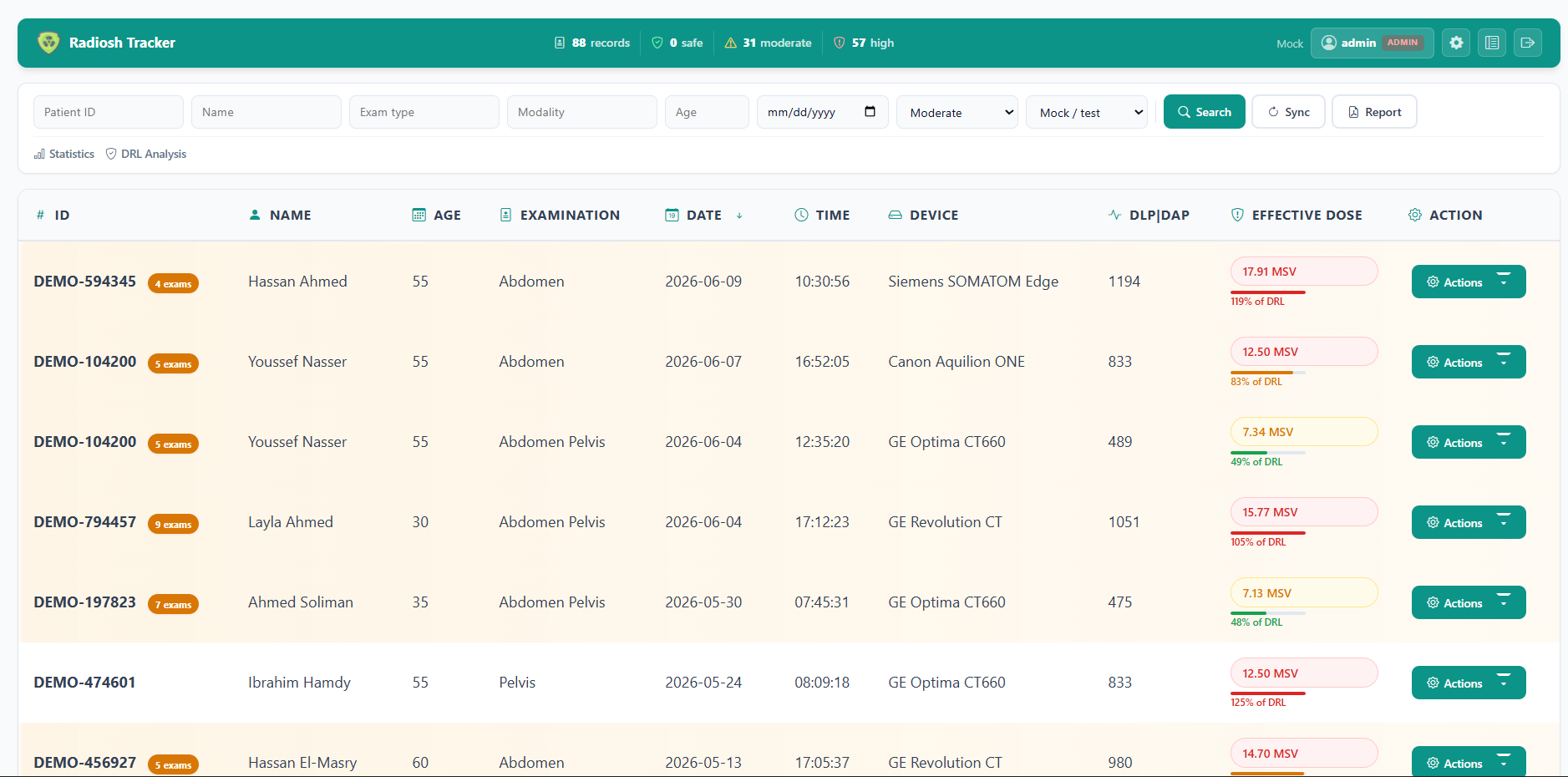
The goal of a modern dose management programme is not a monthly report — it is a continuously updated view of your department's dose performance, with automatic flagging of anything that needs attention. This is what "continuous dose monitoring" means in practice.
It requires an automated pipeline that ingests DICOM RDSRs directly from your PACS or modality gateway as studies complete, normalises the data without manual intervention, applies DRL comparisons in real time, and surfaces exceedances the same day they occur — not weeks later.
When a CT technician accidentally applies a standard adult protocol to a paediatric patient, the dose exceedance should appear in the physicist's dashboard within hours, not at next month's review meeting. That is the clinical difference between a monitoring system and a compliance reporting tool.
Where AI adds something genuinely new
Automated data ingestion and real-time monitoring were possible before large language models. What AI adds is the query interface — the ability for a physicist or department head to ask questions about dose data in plain language and get immediate, structured answers.
Consider the difference between these two workflows:
Without AI: A physicist wants to know whether CT chest doses have been running high over the past six weeks on a specific scanner. They export the data, filter by modality and scanner ID, calculate the 75th percentile, plot a trend, and write a summary. This takes 45 minutes on a good day.
With AI: The physicist types: "Show me CT chest doses on Scanner 3 over the last six weeks compared to our local DRL." They get a table and a trend chart in under ten seconds. If they want to drill deeper — "break it down by technician" or "show only patients over 80 kg" — each refinement takes another question, not another 45 minutes.
This is not a marginal efficiency improvement. It changes the frequency and depth of analysis that is practically possible within a physicist's working week. Instead of one thorough review per month, continuous lightweight monitoring becomes feasible.
The feedback loop that actually protects patients
The purpose of dose monitoring is not compliance paperwork — it is optimising patient protection. That requires a short feedback loop between dose measurement and protocol adjustment. When the loop is six weeks long, protocol problems persist. When it is same-day, they get caught and corrected quickly.
This matters most in three scenarios that happen in every busy department:
- Technician variation: Different operators using the same protocol achieving meaningfully different dose outcomes — detectable only through per-operator analysis that no one runs manually.
- Equipment drift: A scanner's dose output creeping up over time as components age, visible only through longitudinal trend data.
- Protocol migration errors: A new protocol copied from an old one with an incorrect parameter, applied to hundreds of patients before anyone notices.
None of these are caught by a monthly spreadsheet review. All of them are caught immediately by a system that flags exceedances the day they occur.
Key takeaways
- Every modern scanner already records detailed dose data in DICOM headers — the raw material is there.
- Manual extraction, normalisation, and review creates a 4–8 week lag between a dose problem occurring and someone acting on it.
- Continuous dose monitoring requires automated ingestion directly from the PACS or modality gateway, not periodic manual exports.
- AI query interfaces make deep, ad-hoc dose analysis practically feasible within a normal physicist's workflow — no SQL, no spreadsheet pivots.
- The goal is a short feedback loop: problem detected, protocol reviewed, change implemented. That only happens with real-time visibility.